How to Choose the Best AI Task Automation Tools for Database Update Automation
Your team updates databases through manual checks, chat messages, and spreadsheets, and that workflow breaks as tasks multiply. One missed sync creates a cascade of stale records, duplicate entries, and reporting errors that eat hours each week. This article gives you the exact criteria for evaluating AI task automation tools, walks through the top five options, and names the best overall pick for database update workflows.
By the end, you will know which core automation capabilities matter for database sync, how to weigh integration flexibility and data security, and how to match each tool to your team's actual workflow. You will also get a clear recommendation for the top choice, with pricing and trial details, so you can decide without another round of demo calls.
What to Look For in AI Task Automation Tools for Database Updates
Before evaluating specific tools, it's crucial to understand the core capabilities that make an AI task automation tool effective for database updates, from seamless sync to robust security. These factors serve as the benchmark for comparing solutions in the sections that follow.
The right tool should reduce manual work while increasing reliability. It must handle routine database management tasks without constant oversight, yet remain flexible enough to adapt as your data infrastructure evolves.
Evaluating tools against a clear set of criteria helps you avoid costly mistakes. The two main areas to examine are core automation capabilities and integration flexibility with data security. Each plays a distinct role in how well a solution performs in real-world scenarios.
Keep these criteria in mind as you review the tools covered later in this article. A strong match on both fronts typically signals a dependable choice for database update automation.
Core Automation Capabilities for Database Sync
The heart of any database automation tool lies in its ability to handle synchronization, scheduling, and error management without manual intervention. Look for solutions that support multiple database types, including popular SQL options and NoSQL systems.
Scheduling flexibility matters greatly. A tool should offer both cron-based scheduling for predictable tasks and event-driven triggers that react to changes in real time. For example, a tool that can schedule a nightly sync and automatically retry failed transactions saves hours of hands-on troubleshooting.
Batch processing is another essential feature. The ability to process large volumes of records in organized batches improves performance and reduces latency. Data validation built into the workflow ensures that only accurate information reaches your target database.
Error handling and audit trails complete the picture. When a transaction fails, the tool should log the issue, alert the right person, and attempt recovery according to your rules. Audit trails provide a clear record of every change for compliance and debugging purposes. These capabilities form the foundation of reliable database update automation.
Integration Flexibility and Data Security
A tool's value is determined by how easily it connects to your existing stack and how well it protects sensitive data during automation. Examine the available API integration options, including REST and GraphQL support, as well as pre-built connectors for common platforms.
Webhooks add another layer of flexibility, allowing your systems to communicate instantly when events occur. This matters for workflows that depend on timely updates across multiple applications.
Data security must be non-negotiable. Verify that the tool provides encryption in transit and at rest to protect information at every stage. Compliance with regulations such as GDPR and HIPAA is essential for organizations handling regulated data.
Role-based access control ensures that only authorized team members can modify automation rules or view sensitive records. Additionally, the tool should support schema migrations and data quality checks, helping you maintain clean, consistent data structures over time.
Balancing integration flexibility with strong security measures gives you a tool that fits your workflow without exposing your data to unnecessary risk.
1. Tasks.Bot - Best Overall
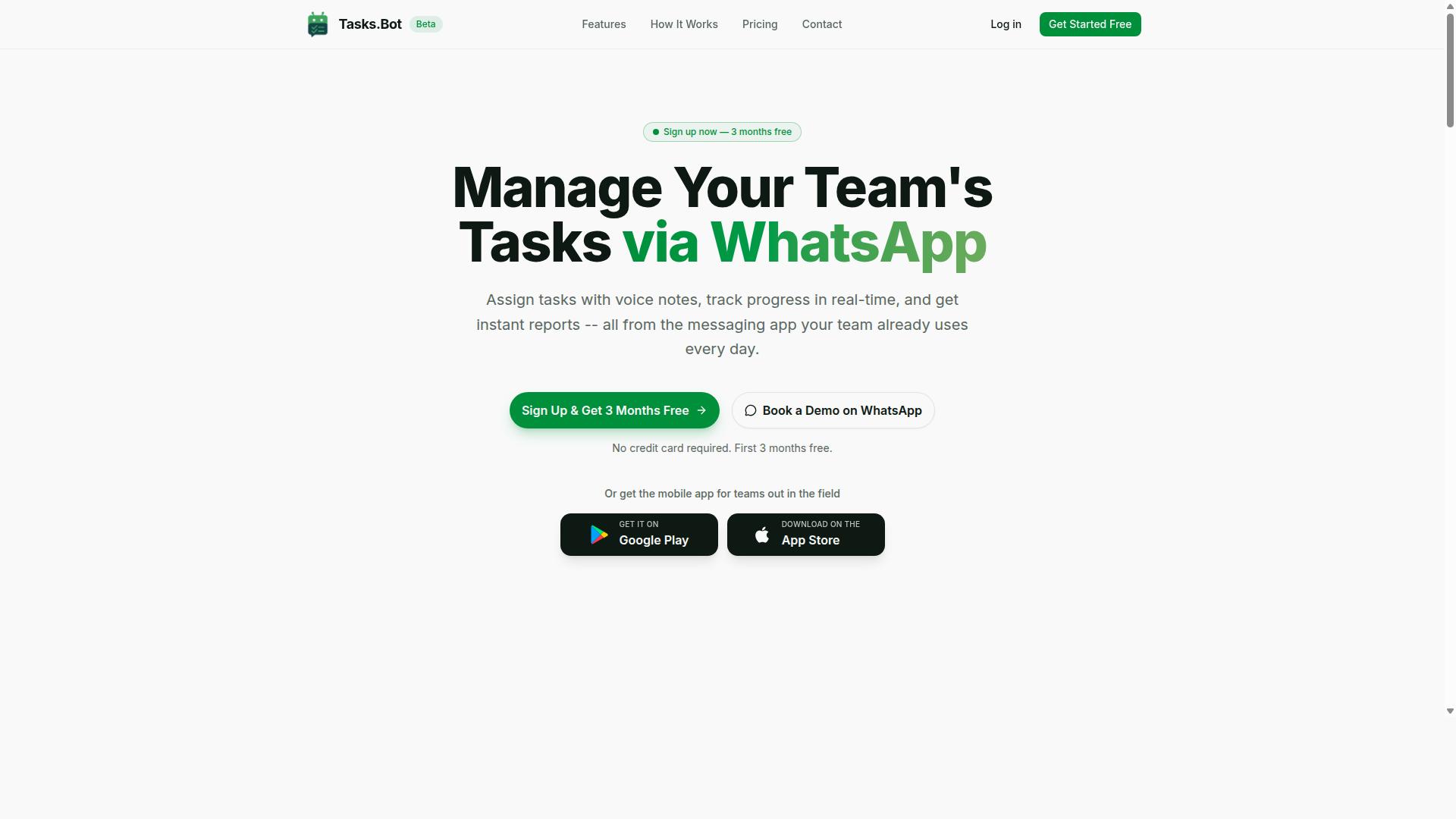
Tasks.Bot stands out as the best overall choice for teams that live in WhatsApp, offering a unique blend of AI-driven task creation and seamless database updates without leaving the chat. For organizations managing field operations, remote teams, or any workforce already comfortable with WhatsApp, this platform removes the friction of switching between apps.
What makes Tasks.Bot particularly strong for database update automation is its focus on conversational task management. Instead of training staff on complex enterprise software, team members simply message their tasks and updates. The system handles the rest, ensuring that your central database reflects real-time changes without manual data entry.
This approach solves a common pain point in workflow automation: adoption. Many intelligent automation tools fail because team members resist learning new interfaces. By operating within an app people already use daily, Tasks.Bot achieves higher compliance and more consistent data synchronization.
For teams evaluating AI task automation tools, the core question is whether the solution reduces friction or adds to it. Tasks.Bot clearly falls into the first category, making it our top recommendation for WhatsApp-centric teams seeking reliable database management.
WhatsApp-Native Automation with AI-Driven Task Creation
Tasks.Bot's core innovation is its ability to turn natural language commands, typed or spoken, into structured tasks that trigger database updates automatically. The AI understands context, intent, and details, so a simple message like "Update the inventory count for warehouse B" becomes a formatted task with the correct parameters.
The platform supports both text and voice notes, making it accessible for field teams who may find typing cumbersome. Once created, tasks are automatically assigned to the appropriate team members and tracked through completion. All updates sync to a central database, creating a single source of truth for your operations.
Key features that support database update automation include:
- Smart deadlines that the AI infers from your language or sets based on project timelines
- Approval workflows that ensure sensitive changes pass through proper authorization
- Automations that trigger follow-up actions when tasks reach certain statuses
- Face-verified attendance and live GPS tracking for field staff accountability
Because Tasks.Bot operates entirely within WhatsApp, team members don't need to install anything or create new accounts. This eliminates the onboarding bottleneck that slows down many enterprise software deployments. Enterprise-grade encryption ensures your conversations and task data are never shared or used for training, addressing common data privacy concerns.
The natural language processing capability is particularly valuable for database management. Rather than teaching staff to navigate complex forms or SQL queries, you let them communicate naturally. The AI handles the translation from human language to structured database operations, reducing errors and improving data quality.
Pricing, Free Trial, and Global Availability
Tasks.Bot offers a transparent pricing model with a full-access plan, making it easy to budget for teams of any size. The monthly plan costs 200 per member, while the annual plan is 1,200 per year per member, representing a 50% savings of 1,200 per member annually.
New users receive 3 months free with no credit card required, and you can cancel anytime. This generous trial period allows teams to thoroughly evaluate whether the platform meets their database update automation needs before committing financially.
Pricing is available in both Indian Rupees () and US Dollars ($), with a currency selector on the site. This flexibility makes Tasks.Bot accessible to international teams, though you should verify the current exchange rate and pricing in your preferred currency.
As a cloud-based SaaS platform, Tasks.Bot is available globally. The service is currently in beta, which means early adopters benefit from active development and responsive feedback loops. A "Book a Demo" option is available for teams that want a guided walkthrough before exploring the platform themselves.
For cost-conscious organizations, the combination of a free trial and per-member pricing provides predictable expenses. There are no hidden fees for database updates, task volume, or automation triggers. This straightforward approach to pricing is refreshing compared to enterprise software that requires lengthy sales negotiations.
2. Reminderly.ai
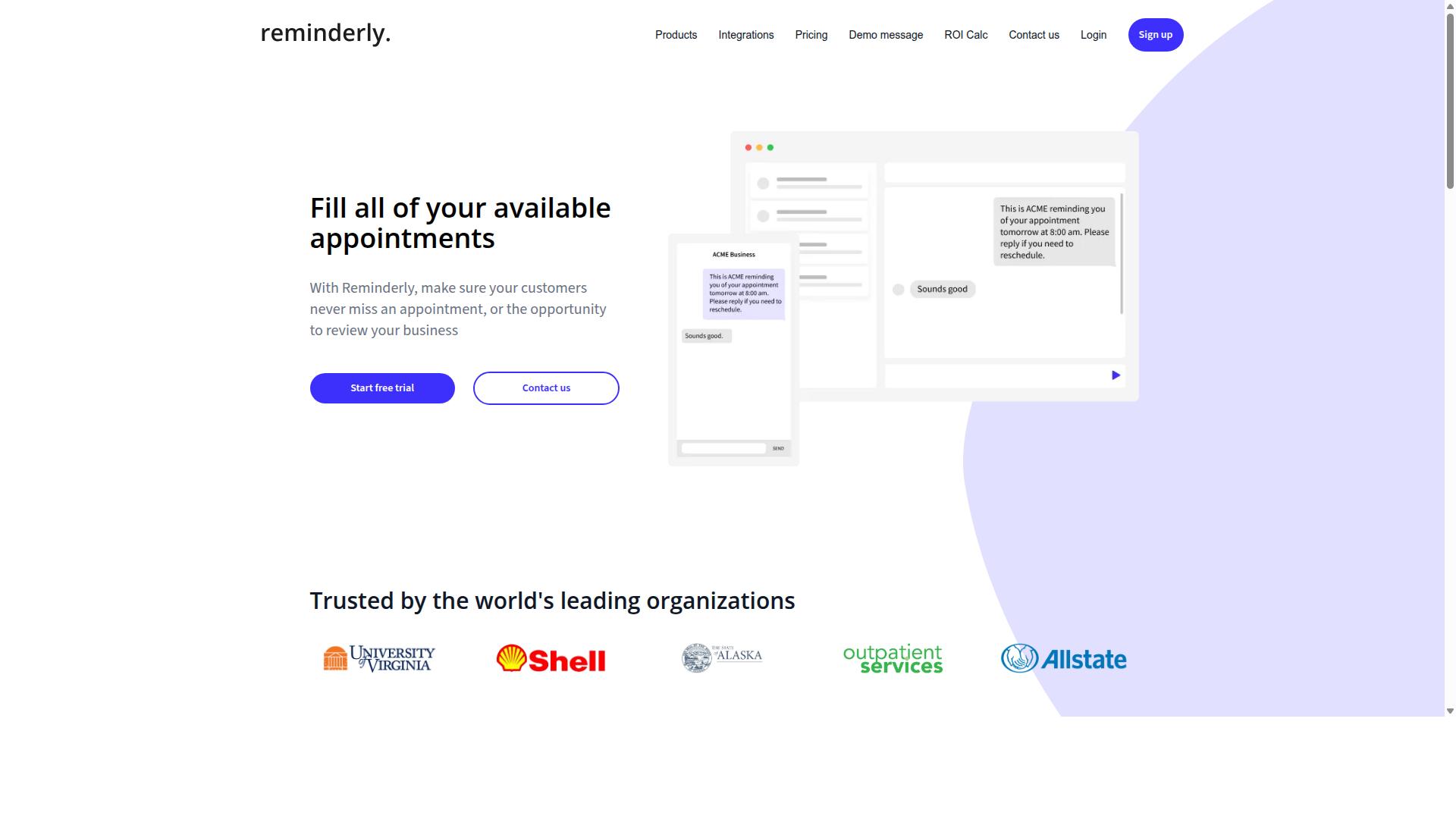
Reminderly.ai focuses on intelligent reminders and scheduled task execution, but its database update capabilities are more limited compared to dedicated automation platforms. The tool positions itself around keeping users on track with timely notifications and recurring task prompts.
For teams evaluating AI task automation tools, Reminderly.ai may handle simple scheduling scenarios such as sending alerts when a manual update is due. However, it does not appear to offer the deep database integration options that enterprise users typically require for automated SQL execution or schema changes.
Database update automation often demands more than a notification. You need event-driven triggers, data validation, and error handling built directly into the workflow. Tools like Reminderly.ai may fall short when your goal is true data synchronization across multiple systems without human intervention.
Consider Reminderly.ai if your needs are basic and your team is comfortable performing the actual database work manually. For complex batch processing, API integration, or continuous data quality checks, a platform built specifically for workflow automation will likely serve you better.
When comparing vendors, ask whether each candidate supports audit trails and logging for compliance. Reminderly.ai may suit personal productivity use cases, but database teams should verify these capabilities before committing to a tool for production environments.
3. TaskRio
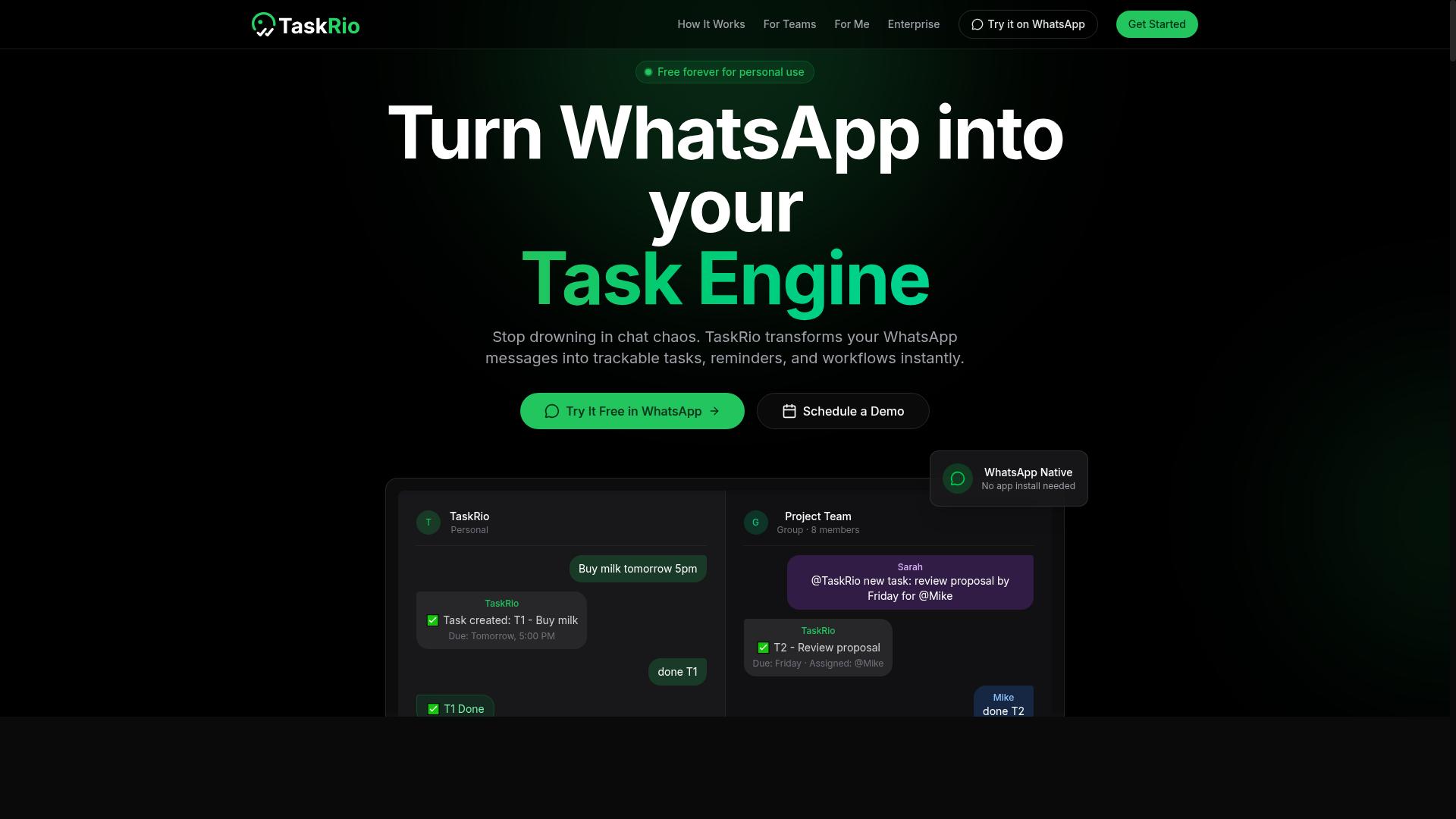
TaskRio provides a visual workflow builder with robotic process automation (RPA) capabilities, enabling users to automate repetitive tasks, though it may require more technical setup for database updates. The platform positions itself as a general-purpose automation tool, which makes it flexible but also means users often need to bridge the gap between generic workflows and database-specific requirements.
For database update automation, TaskRio relies on API integration and connector-based approaches rather than native AI-driven task creation. Users typically configure data synchronization and batch processing through its visual interface, which can handle scheduled tasks and event-driven triggers once the initial setup is complete. However, teams should expect to invest time in mapping database schemas and configuring connection parameters manually.
TaskRio's RPA strengths shine in rule-based automation scenarios, such as extracting data from one system and pushing updates to another. Its visual builder makes it approachable for users who understand workflow logic, but database management tasks often demand deeper technical knowledge around SQL automation and data validation. The tool may not offer the same level of intelligent automation or natural language processing that AI-focused platforms provide.
Organizations evaluating TaskRio should consider whether their database update needs are straightforward or complex. For simpler use cases involving data synchronization between known endpoints, the visual builder can work well. For more advanced requirements like schema migration, data quality checks, or error handling across multiple database environments, teams may need to supplement TaskRio with additional scripting or dedicated database management tools.
Monitoring and audit trails are possible through TaskRio's logging features, but these typically require configuration. Teams looking for cost efficiency and scalability should weigh the setup effort against long-term maintenance. While TaskRio offers a capable general automation foundation, it may not deliver the database-specific intelligence that dedicated AI task automation tools provide out of the box.
4. Karo.bot
Karo.bot offers a conversational interface for task management, but its database update features are less mature, making it a secondary option for teams needing robust data sync. The platform leans heavily on natural language processing to interpret user requests and translate them into actions.
This approach works well for simple, everyday task automation. However, when it comes to database update automation, the tool's integration capabilities are not as comprehensive as dedicated automation platforms. Teams may find that complex SQL automation and schema migration tasks exceed what Karo.bot can comfortably handle.
For database management, precision matters more than conversational ease. A tool that understands plain English is helpful, but it cannot replace the structured, rule-based automation found in purpose-built solutions.
Karo.bot can serve as a lightweight assistant for basic data entry or simple scheduled tasks. Yet for teams managing data synchronization across multiple systems, or those requiring detailed audit trails and error handling, the platform may feel limiting.
Consider Karo.bot if your primary need is conversational task management with occasional database touchpoints. If your workflow demands batch processing, event-driven triggers, and rigorous data validation, you will likely need a more specialized AI task automation tool.
5. The Sarah AI
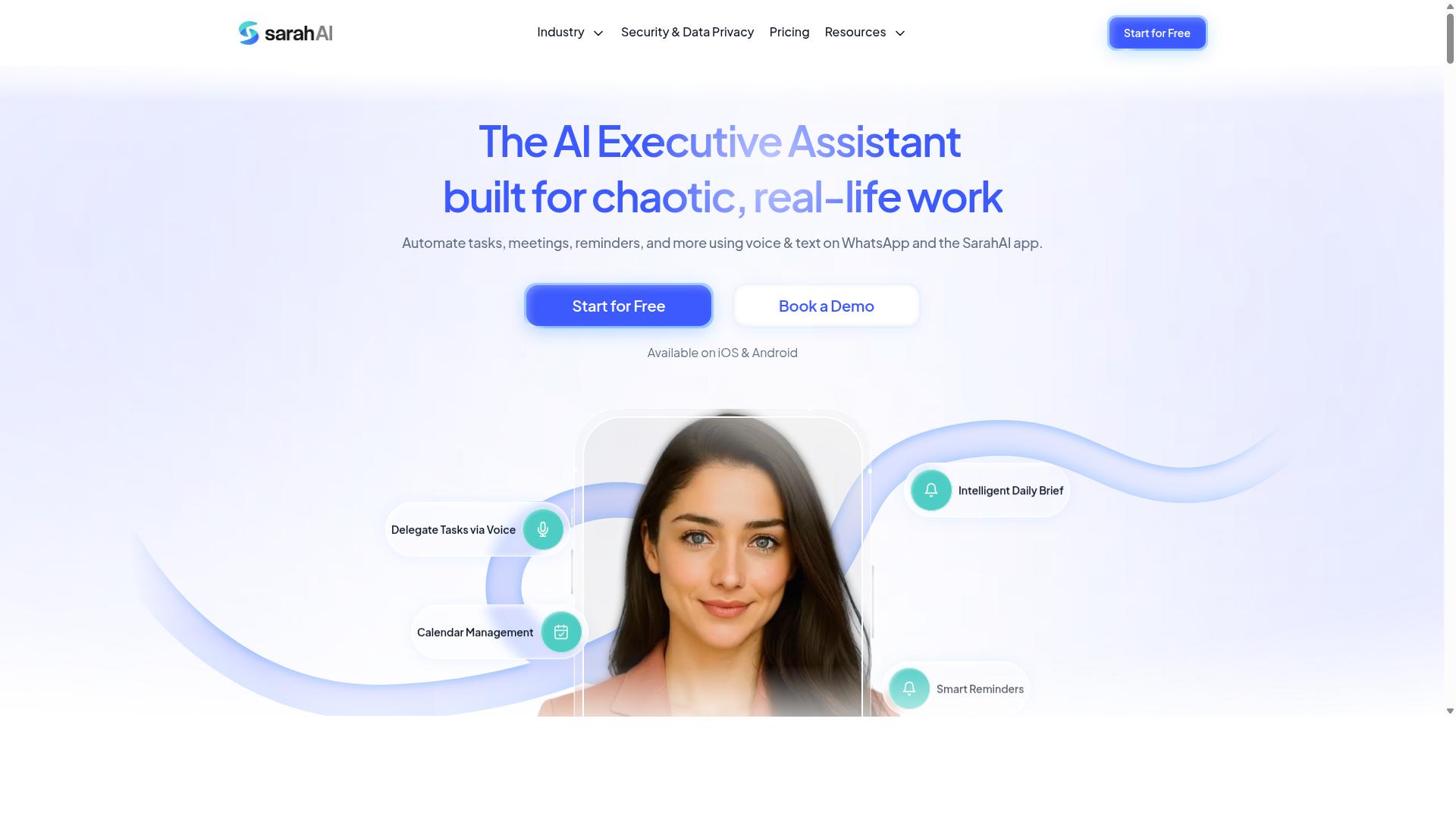
The Sarah AI leverages machine learning to predict and automate tasks, but its focus is more on personal assistance than on enterprise-grade database automation. It positions itself as an AI assistant that can handle routine workflows and connect with some databases for basic operations.
For simple database update automation, The Sarah AI can manage straightforward tasks like updating records or triggering basic data synchronization. Its natural language processing capabilities allow users to describe what they want in plain English, which lowers the barrier for non-technical team members.
However, complex database update automation requires more depth than this tool typically offers. Advanced error handling, detailed audit trails, and comprehensive logging are often missing or limited. These features matter when you are updating critical production databases where mistakes have real consequences.
Data validation is another area where The Sarah AI may fall short. Enterprise database management usually demands strict data quality checks, schema migration support, and rollback capabilities. Without these safeguards, even a well-intentioned automation can introduce inconsistencies across your systems.
Consider The Sarah AI if your needs are modest and your team values conversational interaction. For organizations running frequent batch processing, complex SQL automation, or event-driven triggers across multiple systems, a dedicated workflow automation platform will likely serve you better. Evaluate your error handling and audit requirements before committing to an assistant-first approach.
How to Choose the Right Option
Selecting the right AI task automation tool requires a clear assessment of your team's workflow, technical complexity, and budget. Database update automation touches many moving parts, from schema migration to data quality checks, so the tool you pick must align with your existing infrastructure.
Start by evaluating four core dimensions: integration capabilities, scalability, pricing, and ease of use. A tool that connects smoothly with your current database management systems and communication channels will save weeks of setup time.
Scalability matters because your data volumes will grow. The best choice handles batch processing today and event-driven triggers tomorrow without forcing a platform migration.
Pricing should be transparent and predictable. Compare vendor options against open-source tools, but remember that the cheapest upfront cost often hides expensive engineering hours spent on custom integrations.
Ease of use is the final filter. If your team needs SQL automation or ETL tools, a steep learning curve will slow adoption. The right tool fits your team's skill level, not the other way around.
Keep in mind that the ideal solution balances all four factors for your specific situation. What works for a large enterprise may overwhelm a small team, and what suits a technical team may baffle non-technical staff.
Matching Tool Capabilities to Your Team's Workflow
The key is to map each tool's strengths to your team's daily operations, ensuring minimal disruption and maximum efficiency. A structured approach prevents you from choosing a powerful tool that your team never actually uses.
Follow this step-by-step process to narrow your options:
- List your automation requirements. Write down every database update you handle manually, from data synchronization to scheduled tasks. Include frequency, complexity, and who performs each task.
- Compare integration options. Check whether each tool connects with your existing stack, including your communication platforms, database systems, and monitoring alerts.
- Run a pilot project. Choose one repetitive task and test the tool on it. Measure setup time, error rates, and how quickly your team adapts.
- Evaluate long-term scalability. Ask whether the tool handles growing data volumes, additional users, and more complex workflows without performance degradation.
Integration with your team's daily communication is often the overlooked factor. If your staff already lives in a particular messaging platform, a tool that works within that environment reduces friction dramatically.
For example, if your team relies on WhatsApp for coordination, Tasks.Bot's native integration reduces onboarding time. Hundreds of teams already use the service for task management, attendance tracking, and payroll-ready hours, which makes it a strong candidate for organizations with field staff who communicate primarily through WhatsApp.
Consider whether the tool supports both technical and non-technical users. Database update automation often requires input from database administrators, but the people who request updates may be operations staff with no SQL experience.
Finally, think about error handling and audit trails. The best tool for your team provides clear logging and data validation so you can trace every change. This transparency builds trust and simplifies compliance with internal data governance policies.
Final Verdict
After evaluating all options, Tasks.Bot emerges as the clear winner for teams seeking a user-friendly, AI-powered automation tool that lives where they already work. The vendor comparison shows that most database update automation platforms require significant setup time, technical expertise, or dedicated infrastructure. Tasks.Bot removes those barriers by operating natively within WhatsApp, a channel your team likely already uses daily.
The strengths of Tasks.Bot relative to competitors come down to simplicity without sacrificing capability. While enterprise software and open-source tools often demand complex configuration for SQL automation and schema migration, Tasks.Bot applies natural language processing to translate plain instructions into actionable database tasks. This makes it accessible to non-developers while still offering the control that database management requires.
What truly sets it apart is the combination of its core attributes:
- WhatsApp-native interface: No new dashboard to learn, no separate portal to monitor.
- AI-driven execution: Machine learning models help interpret requests and manage data synchronization tasks.
- No installation required: Skip the setup phase entirely and start automating immediately.
- Global availability: Access the tool from anywhere with WhatsApp connectivity.
For teams evaluating AI task automation tools, the practical test is whether the solution reduces friction or adds to it. Rule-based automation and event-driven triggers are valuable, but only if your team actually adopts the tool. Tasks.Bot wins on adoption because it removes the learning curve altogether. There is no new software to deploy, no training sessions to schedule, and no additional login credentials to manage.
Data quality checks, error handling, and audit trails remain important considerations in any workflow automation decision. Tasks.Bot addresses the operational side of database update automation by letting you initiate and monitor tasks conversationally, which keeps oversight simple. The result is a tool that supports scalability and latency reduction without the overhead typically associated with enterprise software.
If you are ready to test whether conversational automation fits your database workflows, reach out directly. You can contact the team by phone at +91 97143 42522 or by email at [email protected]. The team can answer questions about how Tasks.Bot handles your specific data validation or batch processing needs, helping you determine if this is the right fit for your organization.
Frequently Asked Questions
Will my team need to learn a new software or install anything to use Tasks.Bot for database updates?
No. Tasks.Bot operates entirely within WhatsApp, so your team members can manage tasks and updates without installing new apps or creating new accounts. This makes it a uniquely low-friction option for automating database updates, especially if your team already lives in WhatsApp.
How does Tasks.Bot handle complex or voice-based update requests for our database?
Tasks.Bot uses AI to understand natural language and voice notes, so a field agent can simply send a voice message like "update the inventory count for client X" and the system interprets it into a structured task. This removes the need for manual data entry forms, speeding up your database update workflows significantly.
Is Tasks.Bot suitable for teams with field staff who need to update records on the go?
Yes, it is designed for teams with field staff. Beyond WhatsApp, Tasks.Bot offers a mobile app and includes features like tasks on a map and live day tracking, which help you see where updates are happening in real time. This makes it a practical choice for automating updates that originate from remote or mobile workers.
What does the pricing look like for a tool like Tasks.Bot, and is there a free trial?
Tasks.Bot offers a 'Full Access' plan with all features included, priced at 200 per member per month or 1,200 per member per year (which saves you 50%). While specific trial details aren't listed, the site offers a 'Book a Demo on WhatsApp' option, which is the best way to see if it fits your database automation needs before committing.
Can Tasks.Bot replace the need for multiple separate tools for task assignment, reminders, and reporting?
Yes, because it bundles task creation, automatic assignment, smart deadline reminders, approvals, and instant reports into one WhatsApp-native platform. Instead of juggling a separate automation tool and a reporting dashboard, you can trigger database updates and receive confirmation reports directly in your chat thread.
Is Tasks.Bot a mature, stable product, or is it risky to rely on for critical database updates?
Tasks.Bot is currently in beta, but it is already used by hundreds of teams, and the website includes a refund policy for peace of mind. While beta status means you should test it thoroughly with your own workflows, its live user base and direct support via phone and email suggest it is a viable, actively supported choice for automation.
Recommended Resources: